

How to Choose the Best Treatment for Frizzy Hair
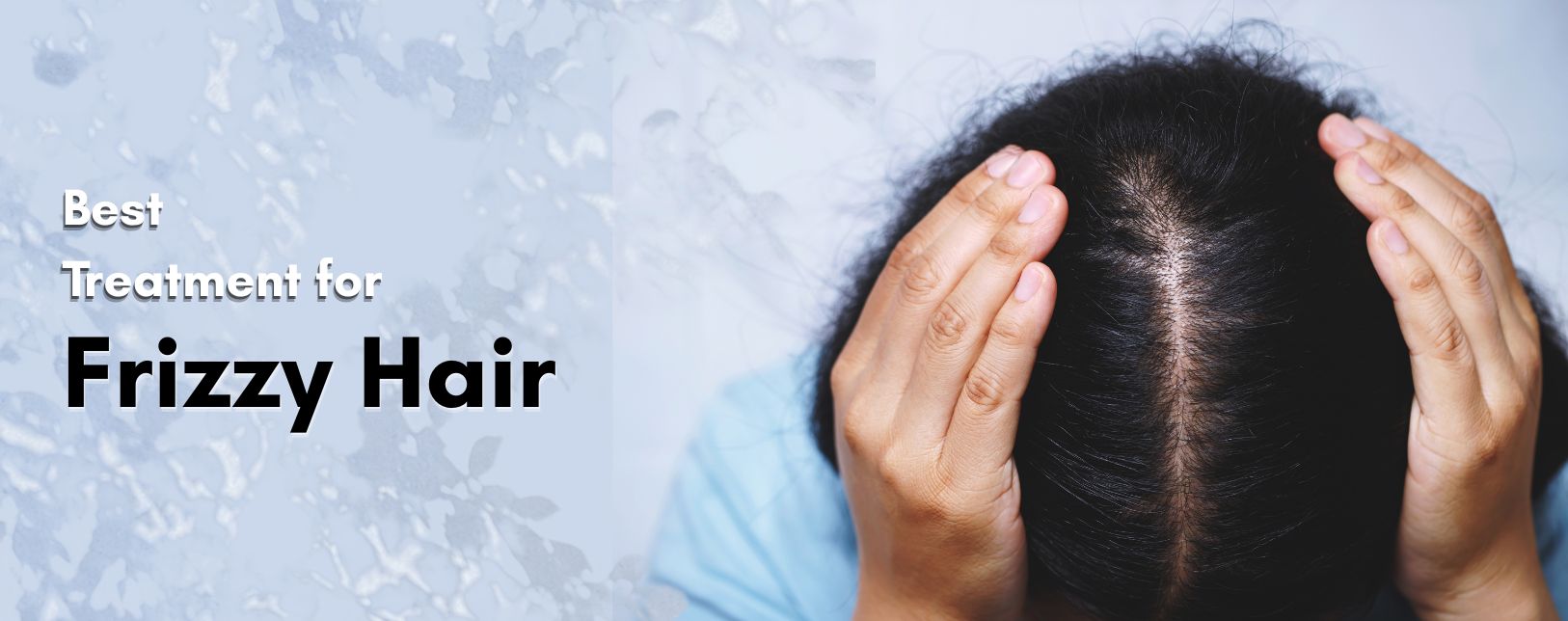
Frizzy hair does not always need the same treatment. For some people, the problem is mainly dryness and lack of conditioning. For others, repeated colouring, heat styling, humidity or chemical processing may have changed the condition of the hair. That is why the best treatment for frizzy hair depends on your hair texture, damage level, desired finish and maintenance routine. If you are considering a professional hair treatment, the first question should not be Which treatment is trending? It should be “What is causing my hair to become frizzy, and what result do I actually want?” A hair spa may be enough for dry, dull lengths. Someone dealing with persistent unruliness may consider keratin or another smoothing service. Chemically damaged hair may need repair and conditioning before another chemical treatment is considered.
What Causes Frizzy Hair?
Frizz happens when individual hair strands do not lie smoothly together. Dryness, humidity, friction, heat damage, chemical processing and the natural structure of curly or wavy hair can all contribute to a rougher, less controlled appearance.
Damaged hair can also become more fragile and prone to breakage, which can make frizz look worse. Dermatologists recommend gentle washing, regular conditioning, careful detangling and limiting excessive heat because everyday styling habits can contribute to brittle and frizzy hair.
Common reasons your hair may look frizzy include:
- Dry or under-conditioned hair
- Naturally curly or wavy texture
- Frequent blow-drying or heat styling
- Regular colouring or bleaching
- Previous straightening or chemical services
- Rough towel drying
- Excessive brushing or detangling
- Humidity
- Friction from clothing or bedding
- Split ends and breakage
- Product buildup or an unsuitable hair-care routine
This matters because frizz is a symptom, not a diagnosis. Treating the symptom without understanding the condition of the hair can lead to disappointing results.
What Is the Best Treatment for Frizzy Hair?
There is no single treatment that is best for everyone. The right option depends on whether your main concern is dryness, damage, lack of manageability, excessive volume or a desire for a smoother appearance.
As a general guide:
Your main concern | Treatment category worth discussing |
| Dry, dull and rough hair | Hydration, conditioning or hair spa |
| Mild frizz and poor manageability | Conditioning or smoothing-focused care |
| Persistent frizz and coarse texture | Keratin or professional smoothing treatment |
| Frizz with chemically damaged hair | Repair, bond-care and conditioning |
| Weak or brittle hair | Strengthening/protein-focused treatment |
| Curly hair that feels dry | Moisture-focused curly-hair care |
| Desire for a straighter appearance | Smoothening or other straightening services |
This is only a starting point. A stylist should consider your hair's current condition and previous chemical history before recommending a treatment.
How to Choose the Best Treatment for Frizzy Hair
The easiest way to choose is to work backwards from your hair's condition and your desired result.
1. Decide what you actually want to change
Frizzy can mean different things.
Maybe your hair is dry and puffy after washing. Maybe your curls lose definition. Maybe humidity makes your hair expand. Or perhaps you want a straighter, smoother appearance that requires less daily styling.
These are different goals.
Before booking a treatment, decide whether you want:
- Softer hair
- More moisture
- Less visible frizz
- Easier styling
- More shine
- Reduced volume
- A smoother finish
- A noticeably straighter appearance
- Better condition after chemical damage
The treatment should be selected around that goal.
2. Consider your hair's history
Tell your stylist about recent:
- Hair colour
- Bleaching
- Highlights
- Smoothening
- Straightening
- Perming
- Frequent heat styling
- Previous treatments
This is especially important when considering another chemical service.
Hair that looks frizzy but is already fragile may need conditioning or repair rather than another aggressive process.
3. Look at the ends
Your ends often reveal how much stress your hair has experienced.
If they feel rough, split easily or break when handled, simply making the surface look smoother may not address the underlying issue.
A good consultation should distinguish between temporary cosmetic smoothness and improving the overall condition and manageability of the hair.
Hair Spa: When Is It a Good Choice for Frizz?
A hair spa or deep-conditioning service can make sense when the main issue is dryness, roughness or dull-looking hair.
It is generally more appropriate when you want your hair to feel:
- Softer
- More conditioned
- Easier to detangle
- Smoother to the touch
- More manageable
A hair spa is not the same as a permanent smoothing treatment. Its effects are generally temporary and depend on your hair condition and home-care routine.
If your hair is healthy but feels dry after regular heat styling, colouring or environmental exposure, starting with conditioning may be more sensible than immediately choosing a stronger chemical service.
Keratin Treatment for Frizzy Hair
Keratin treatments are commonly chosen by people who want smoother, more manageable hair and less visible frizz.
The treatment can make hair easier to style and may reduce blow-drying time. However, the result can vary depending on the formulation, your natural texture, existing damage and the way the service is performed. Cleveland Clinic also notes that keratin treatments may affect natural curl patterns in some people.
Who may consider keratin?
It may be worth discussing if:
- Your hair is naturally coarse or unruly
- Frizz is your main styling concern
- You want smoother-looking hair
- You regularly spend a lot of time blow-drying
- You want easier day-to-day styling
But keratin should not automatically be considered the answer to every type of frizz.
If your hair is severely damaged, the condition of the hair should be considered before another chemical or heat-intensive service.
Hair Smoothening: Is It Right for Frizzy Hair?
Smoothening is generally considered by people who want a more controlled, smoother and often straighter-looking finish.
The key question is how much you want to change your natural texture.
If you want to retain movement and simply reduce frizz, one type of smoothing service may be appropriate. If you want a significantly straighter appearance, another treatment may be discussed.
Do not choose a treatment solely because someone else's before-and-after photograph looks good.
Your hair may respond differently because of:
- Natural texture
- Thickness
- Previous chemical treatments
- Colour history
- Existing damage
- Hair density
- Home-care routine
The Vanity's own guidance on hair treatments similarly recommends starting with the condition and desired outcome of the hair rather than selecting a treatment simply by its name.
Hair Botox vs Keratin: Which Should You Choose?
These treatments are often compared because both may be discussed when someone wants softer, smoother and more manageable hair.
But the names alone do not tell you everything.
Hair Botox is generally positioned as a cosmetic conditioning and smoothing treatment rather than injectable Botox. It may appeal to someone who wants improved softness, shine and manageability without necessarily seeking a very straight finish.
Keratin treatments are more commonly associated with reducing frizz and making hair smoother and easier to style.
Instead of asking which treatment is universally better, ask:
Which treatment is appropriate for my current hair condition and the finish I want?
That is a much more useful comparison.
What Are the Benefits of Professional Hair Treatment?
The benefits depend on the treatment selected, but professional hair services may help with:
- Improved manageability
- Softer-feeling hair
- Reduced appearance of frizz
- Easier styling
- Improved surface smoothness
- Better shine and finish
- Conditioning of dry lengths
- More controlled appearance
- Reduced time spent styling
However, hair treatment benefits should not be confused with permanent hair repair.
A service can improve how damaged hair looks and feels without reversing every form of structural damage. Your daily routine still matters.
What Should You Do at Home for Frizzy Hair?
A salon treatment works best when your everyday routine is not working against it.
The American Academy of Dermatology recommends conditioning after washing, handling wet hair gently, avoiding rough towel rubbing and limiting excessive heat.
A simple anti-frizz routine
Wash the scalp rather than aggressively rubbing the lengths.
Shampoo is primarily for cleansing the scalp. Letting the lather rinse through the lengths is generally less harsh than repeatedly scrubbing the hair itself.
Condition regularly.
The conditioner helps moisturise and detangle hair. The amount and placement should depend on your hair type and how dry your lengths are.
Be gentle when your hair is wet.
Wet hair is more vulnerable to breakage. Use an appropriate wide-tooth comb or detangling method rather than aggressively pulling through knots.
Stop rubbing your hair dry with a towel.
Instead, gently wrap or blot the hair to remove excess water.
Reduce unnecessary heat.
Frequent high-heat styling can contribute to damage. Dermatologists recommend limiting excessive heat and using lower settings where possible.
Don't ignore your natural texture.
If your hair is naturally curly or wavy, trying to brush it into submission every day can increase frizz and breakage. Curly hair often benefits from moisture-focused care and gentler detangling.
How Do You Know If Your Hair Needs Repair Instead of Smoothing?
This is one of the most important questions to ask before booking a treatment.
Consider repair-focused care if your hair is:
- Breaking noticeably
- Extremely dry after bleaching
- Brittle
- Rough throughout the lengths
- Showing significant split ends
- Heavily processed
- Losing its normal elasticity
- Difficult to manage because of damage rather than natural texture
In this situation, immediately adding another chemical process may not be the most appropriate first step.
The American Academy of Dermatology advises limiting damaging chemical and heat practices and recommends professional assessment when there are concerns about hair health.
How Much Does a Hair Treatment Cost?
There is no single reliable price for a hair treatment.
Salon pricing can vary according to:
- Treatment type
- Hair length
- Hair thickness
- Amount of product required
- Brand or formulation
- Level of damage
- Stylist expertise
- Salon location
- Whether additional services are required
For that reason, a quoted price without knowing the treatment and hair length can be misleading.
If you are comparing hair treatment in Dehradun, ask the salon:
- What treatment are you recommending?
- Why is it suitable for my hair?
- What result should I realistically expect?
- How long should the result remain noticeable?
- What aftercare will I need?
- Are there additional charges based on hair length or density?
- Will this treatment affect my natural texture?
- Is my current hair condition suitable for the service?
Those questions tell you considerably more than simply comparing two prices.
Common Mistakes People Make With Frizzy Hair
Choosing a treatment because it worked for someone else
Two people can have completely different hair histories and get different results from the same service.
Assuming more chemical processing means smoother hair
Smoother-looking hair is not automatically healthier hair. The condition of the hair should remain part of the decision.
Ignoring previous colour or bleaching
Your stylist needs to know what has already been done to your hair before recommending another chemical treatment.
Using excessive heat after treatment
A salon treatment cannot compensate for a daily routine that repeatedly exposes the hair to unnecessary heat.
Treating every type of frizz as dryness
Frizz can come from natural texture, damage, humidity, breakage and styling habits. The cause matters.
Expecting permanent results from every treatment
Different services have different durations, and maintenance can influence how long the results remain noticeable.
When Should You See a Dermatologist Instead of Booking a Salon Treatment?
Not every hair concern is cosmetic.
If you have sudden or persistent hair loss, significant scalp irritation, sores, severe itching or another unexplained scalp problem, consider consulting a qualified healthcare professional.
A salon treatment can improve the appearance and manageability of hair, but it cannot diagnose every cause of hair loss or scalp disease.
This distinction is particularly important when someone searches for a “hair treatment” because they are actually experiencing a medical hair or scalp concern.
Choosing a Hair Treatment in Dehradun
If you're looking for hair treatment in Dehradun, start by comparing the consultation process rather than simply looking for the longest list of services.
A useful salon consultation should consider:
- Your natural hair texture
- Hair length and thickness
- Previous colour or chemical services
- Current damage
- Scalp condition
- Your daily styling habits
- The finish you want
- How much maintenance you are comfortable with
At The Vanity Unisex Salon, hair treatment is one of the salon's service categories, alongside hair styling, colour and other beauty services. The salon is located at Pacific Hills, Kishanpur, Dehradun.
The important thing is not to arrive asking for a treatment simply because it is popular. Explain what you dislike about your hair and what you want it to look and feel like afterward.
That gives the stylist a better basis for recommending an appropriate service.
So, What Is the Best Treatment for Frizzy Hair?
The best treatment for frizzy hair is the one that matches the cause of the frizz, your current hair condition and the finish you want.
For dry hair, conditioning may be enough. For persistent frizz and difficult styling, keratin or another smoothing treatment may be worth discussing. For chemically damaged hair, repair and conditioning may need to come first.
There is no prize for choosing the strongest treatment.
The better approach is to understand your hair first, set realistic expectations and choose a service that your hair can comfortably handle.
If you're considering the best hair treatment in Dehradun, use your consultation to ask why a particular treatment is being recommended, not just how long it lasts.
Your hair does not necessarily need the most intensive treatment. It needs the right one.
Frequently Asked Questions
1. What is the best treatment for frizzy hair?
There is no single treatment for everyone. Keratin and smoothing treatments may suit persistent frizz and difficult-to-manage hair, while dry or mildly frizzy hair may benefit more from conditioning or hair-spa care. The right choice depends on texture, damage and the desired finish.
2. Is keratin good for frizzy hair?
Keratin treatments are commonly used to reduce frizz and improve manageability. They may also make blow-drying easier. However, the result depends on the formulation, natural texture and condition of your hair. A consultation is useful before choosing the service.
3. Is hair spa good for frizzy hair?
A hair spa or deep-conditioning treatment can be useful when frizz is associated with dryness, roughness or dullness. It generally provides a temporary improvement rather than permanently changing the hair's natural texture.
4. Is hair Botox better than keratin for frizzy hair?
Neither is universally better. Hair Botox is generally associated with conditioning, softness and improved appearance, while keratin treatments are commonly selected for frizz reduction and manageability. Your hair condition and desired result should determine the choice.
5. How can I reduce frizz naturally at home?
Use conditioner regularly, handle wet hair gently, avoid rough towel drying and limit excessive heat. If you have curly or wavy hair, use a routine suited to your texture rather than repeatedly brushing or heat-styling it straight.
6. How long does a frizz-control hair treatment last?
There is no universal duration. It depends on the treatment, hair condition, washing frequency, home-care products, heat exposure and other styling habits. Ask your stylist for an estimate based on your specific hair rather than relying on a generic duration.
7. Can a salon treatment repair damaged hair permanently?
Salon treatments can improve the appearance, feel and manageability of damaged hair, but they should not be treated as a permanent reversal of all structural damage. Preventing further damage and adjusting your hair-care routine are also important.
8. Should I get keratin or smoothening for frizzy hair?
It depends on the finish you want. If your priority is reduced frizz and easier styling, a keratin or smoothing option may be discussed. If you want a noticeably straighter appearance, your stylist may recommend a different approach. Previous chemical treatments and current hair condition should also be considered.